
In Borderlands Gloria Anzaldúa discusses the idea of language identity and the confusion she had growing up concerning language. Anzaldúa explains the dichotomous ways her two ethnic groups reacted to her language. In college, she was “required to take two speech classes. Their purpose: to get rid of her accent”, but her Latino peers would proclaim, “pocho, cultural traitor. You’re speaking the oppressor’s language by speaking English, you’re ruining the Spanish language” (Anzaldúa 77). Both of the cultures Anzaldúa identified with, criticized her language, which she views as essential to one’s identity. Through her writing, I think that Anzaldúa was able to express this duality that she experienced. Although the chapter was primarily written in English, there were many parts where the author used other languages and dialects. The way Anzaldúa mixed so many different languages really allowed the reader to experience how she talked in real life.
It was really hard for me to read the parts of the reading that were in Spanish or in a Spanish dialect. I know enough Spanish that I could get the gist of what Anzaldúa was writing, but it took a lot of extra effort to try and interpret the Spanish. It really allowed me to put myself in the shoes of people who continually have to communicate is a language that they are not fluent in. The whole time I was reading the text I was on the brink of not being able to fully comprehend the full meaning of what Anzaldúa was trying to convey. I think Anzaldúa did this for a few reasons. First, I think that it allowed the reader to understand what it is like for immigrants to move to a new country and not be fluent in the common language, and the subsequent pressure they face to learn the new language. Second, I think that she uses it to show what Chicano is and the mix of languages that it includes. Finally, it allows people to understand the importance of language in the development of personal identity.
To me, the use of multiple languages allowed me to better understand the sense of double identity that Anzaldúa felt. Furthermore, I was able to really understand the whole idea that, “ethnic identity is twin skin to linguistic identity – I am my language” (Anzaldúa 81). How you understand the world around you and how you express your ideas and thoughts is a huge part in shaping who you are. If a person is ridiculed for language they use, how can they truly feel comfortable. Neither of the groups that Anzaldúa identified with fully accepted her; ultimately, I believe that Anzaldúa found peace with her identity. In the end, I think it is important to know that you do not need to be defined by an already existing label. At one point Anzaldúa asserts, “I will no longer be made to feel ashamed of existing. I will have my voice: Indian, Spanish, white” (81). Just how Chicano was a new, unique identity that was created I don’t think people should shy away from creating their own identity.
 Gloria Anzaldúa writes in many languages in Borderlands /La frontera: The New Mestiza including “Anglo-American English, Castilian Spanish, Tex-Mex, Northern Mexican dialect, Nahuatl, … and Chicano Spanish” (77). Not all of her narrative is in English although she translates some. How did you read the parts of the narrative that you did not understand (or perhaps you did understand them)? How did not understanding several lines in the text make you feel as a reader? Why might Anzaldúa be intentionally making you feel this way?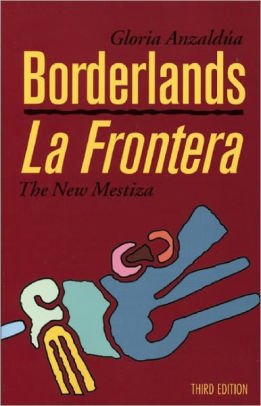
 American Identity in the World Sp19